As an experienced technician with a decade in the field, I’ve seen countless cooling solutions, but the oscillating tower fan consistently stands out for its blend of efficiency, design, and user-friendly features. They are a sleek, modern alternative to traditional fans, designed to provide widespread comfort without dominating your living space. If you’re seeking to enhance air circulation and maintain a comfortable indoor climate, understanding the nuances of these popular appliances is key to making the best choice for your home.
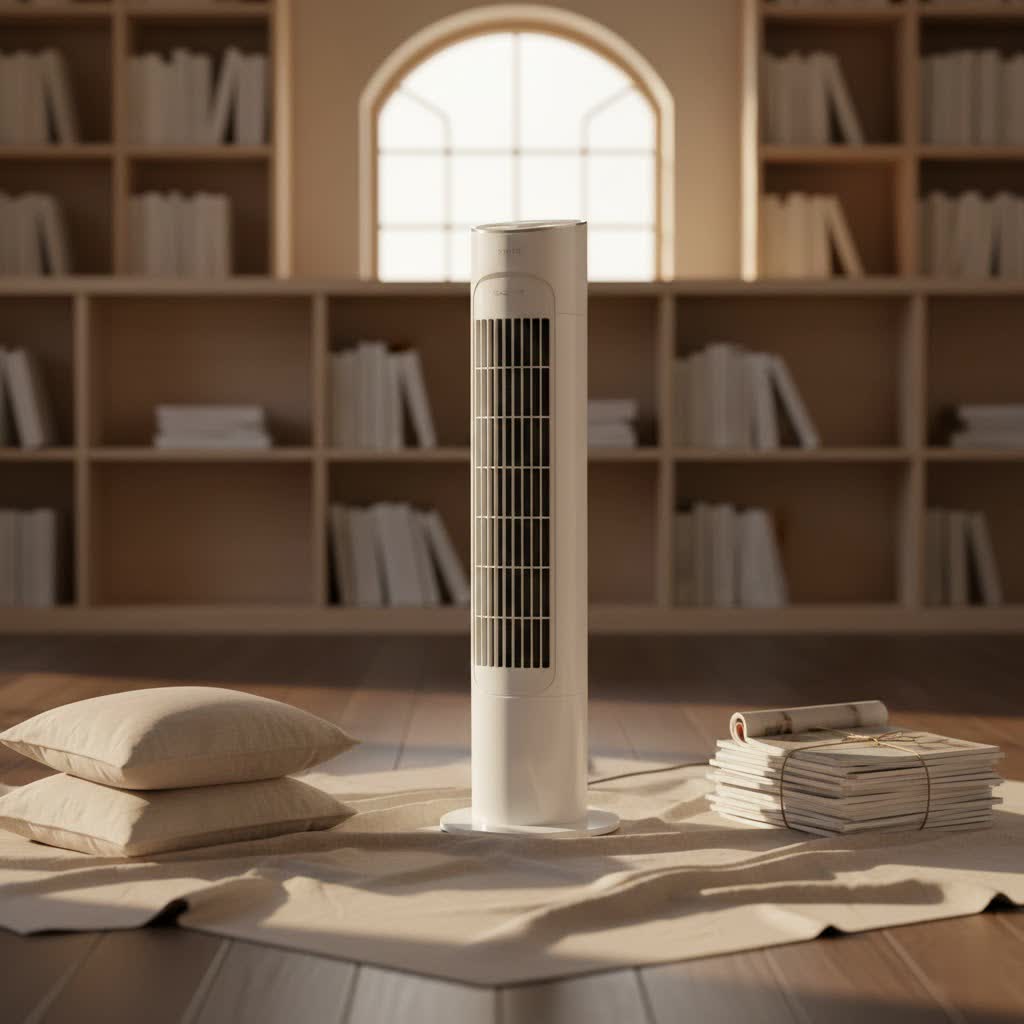
The Advantages and Disadvantages of Oscillating Tower Fans
Oscillating tower fans have become a staple in many households, thanks to their distinct design and functionality. However, like any appliance, they come with their own set of pros and cons that are important to consider.
-
Advantages:
- Space-Saving Design: Their tall, slender profile allows them to fit into tight corners or narrow spaces where bulkier pedestal or box fans simply wouldn’t. This makes them ideal for apartments, bedrooms, and offices.
- Quiet Operation: Many modern tower fans are engineered for remarkably quiet operation, making them perfect for bedrooms or workspaces where noise could be a distraction. Some even offer specific “sleep modes” to further reduce sound and dim display lights.
- Even Air Distribution: The oscillation feature—the fan’s ability to pivot back and forth—ensures that air is circulated across a wider area, providing a more consistent and refreshing breeze throughout the room rather than just in one direction.
- Aesthetic Appeal: With their minimalist and contemporary designs, tower fans often blend seamlessly with modern home decor, looking more like an intentional design element than a functional appliance.
- Enhanced Safety: Many models feature bladeless designs or enclose the blades within a protective grille, making them a safer choice for homes with children or pets.
- Portability: Generally lightweight and often equipped with integrated carrying handles, most tower fans are easy to move from one room to another as needed.
-
Disadvantages:
- Price Point: Oscillating tower fans often come with a higher price tag compared to traditional box or pedestal fans, especially models with advanced features or premium brands.
- Limited Cooling Power in Large Spaces: While excellent for distributing air, their cooling effect might be less intense than a powerful pedestal fan with larger blades, especially in very large, open-concept rooms. They circulate existing air rather than significantly lowering the ambient temperature.
- Maintenance Requirements: To maintain optimal performance and air quality, regular cleaning of the air intake and internal components (if accessible) is necessary. Dust accumulation can reduce efficiency.
|
Our Picks for the Best Tower Fan in 2026
As an Amazon Associate I earn from qualifying purchases.
|
||
| Num | Product | Action |
|---|---|---|
| 1 | Xcity TP09Pro Bladeless Tower Fan, 3-in-1 Air Purifier, Space Heater & Cooling Fan, HEPA H13 Filtration, Remote & Touch Control, Ultra-Quiet DC Motor for Bedroom & Home Office |

|
| 2 | LEVOIT Tower Fan for Bedroom, 25ft/s Velocity Standing Fan with 28dB Quiet for Sleep, Remoter, 12H Timer, 5 Speeds, 4 Modes, 90° Oscillation for Home, Office, Indoor, Bladeless 36 inch, White |
|
| 3 | Dreo Tower Fan for Bedroom, 90° Oscillating Standing Fans for Room with 4 Speeds, 3 Modes, 28dB Quiet for Sleep, 25ft/s Velocity, 8H Timer, Remote, Living Room, Office, Home, Black, TF117 - for Bedroom, for Room, for Sleep, 25ft/s Velocity, Living Room, Office, Home, Black |
|
| 4 | Dreo Tower Fan for Bedroom, 4 Speeds, 3 Modes Standing Fans for Room with 90° wide Oscillating, 28dB Quiet for Sleep, 25ft/s Velocity, 29ft Coverage, 8H Timer, Remote, Living Room, Office, Home, Grey |
|
| 5 | Tower Heater Fan with 4L Humidifier, 1800W Heating/Cooling, 2 Heat Levels, 3 Fan Speeds, 120° Oscillation, Indoor Space Heater with Timer & Safety Lock |
|
| 6 | Dreo Tower Fan for Bedroom, 25ft/s Velocity Quiet Floor Fan, 90° Oscillating Fans for Indoors with 4 Speeds, 4 Modes, 8H Timer, Standing Fans, Bladeless Fan, White, Nomad One (DR-HTF007) |
|
| 7 | Dreo Tower Fan for Bedroom, 4 Speeds, 3 Modes Standing Fans for Room with 90° wide Oscillating, 28dB Quiet for Sleep, 25ft/s Velocity, 29ft Coverage, 8H Timer, Remote, Living Room, Office, Home, White |
|
| 8 | LEVOIT Classic 36 inch Tower Fan for Bedroom, 25ft/s Airflow Standing Fan that Blows Cold Air for Home, 90° Oscillation, Quiet 28dB, Remote, 12H Timer, 5 Speeds, 4 Modes with Smart Sensor, Black |
|
| 9 | Amazon Basics 28" 60-Degree Oscillating Tower Fan for Bedroom, Living Room, Office, With 3 Speeds, Intuitive Mechanical Control, Black, 35W, 27.8"H x 9.4"D x 9.4"W |
|
| 10 | Dreo Tower Fan for Bedroom, 25ft/s Velocity Quiet Floor Fan, 90° Oscillating Fans for Indoors with 4 Speeds, 4 Modes, 8H Timer, Standing Fans, Bladeless Fan, Black, Nomad One (DR-HTF007) |
|
Common Types of Tower Fans on the Market
The market for tower fans offers a diverse range of models, each catering to different preferences and needs.
- Basic Mechanical Tower Fans: These models typically feature simple dial or push-button controls for speed and oscillation. They are straightforward, reliable, and generally the most affordable option, offering essential cooling without advanced features.
- Remote-Controlled Tower Fans: Adding a layer of convenience, these fans come with a remote, allowing you to adjust settings, speed, and oscillation from across the room. Many also include timers for automatic shut-off.
- Smart Tower Fans: Integrating with smart home ecosystems, these fans can be controlled via smartphone apps, voice commands (through Alexa or Google Assistant), and often feature auto modes that adjust fan speed based on room temperature. Some premium models, like those from Dyson, may offer air purification capabilities as well.
- Fan and Heater Combo Tower Fans: Designed for year-round utility, these versatile units combine cooling fan capabilities with a built-in space heater, allowing you to switch between modes depending on the season.
- Bladeless Tower Fans: Exemplified by brands like Dyson, these fans use Air Multiplier technology to draw in air and project a smooth, powerful stream without visible fast-spinning blades. This design enhances safety, simplifies cleaning, and often contributes to a more elegant aesthetic.
Comparing Popular Oscillating Tower Fan Brands
Choosing a tower fan often comes down to brand reputation, features, and budget. Here’s a comparison of some well-known brands:
- Dyson: Renowned for innovative, bladeless designs and advanced technology, Dyson fans often include air purification and heating functions. They are exceptionally stylish and quiet but come at a premium price.
- Honeywell: A trusted name in home comfort, Honeywell offers durable and reliable tower fans with user-friendly controls, often featuring multiple speed settings and quiet operation, making them a solid mid-range choice.
- Panasonic: Known for quality and consistency, Panasonic tower fans typically offer stable performance and good value. They might have a more classic design but are built to last.
- Xiaomi: This brand excels in minimalist design and smart home integration at competitive prices. Xiaomi tower fans often connect to smartphone apps and offer a host of smart features.
- Dreo: Gaining popularity for powerful airflow, quiet operation, and smart features across a range of price points, Dreo offers competitive models for various needs, from compact to large room cooling.
- Lasko: A long-standing brand, Lasko provides dependable and affordable tower fans. Many models focus on essential features, good airflow, and durability, making them a strong budget-friendly option.
- Vornado: While known for whole-room air circulation, Vornado tower fans stand out for their exceptional airflow capacity, often measured in high CFM (cubic feet per minute), making them suitable for larger spaces.
Tower Fan Comparison Table
| Feature | Dyson Tower Fans | Honeywell Tower Fans | Panasonic Tower Fans | Xiaomi Tower Fans | Dreo Tower Fans | Lasko Tower Fans | Vornado Tower Fans |
|---|---|---|---|---|---|---|---|
| Price Range | Premium | Mid-range | Mid-range | Competitive | Mid-range | Budget-friendly | Mid-range to Premium |
| Technology | Bladeless, Air Multiplier, Purification (select models) | QuietSet, various speed/mode options | Stable performance, basic features | Smart connectivity, app control | Powerful airflow, quiet operation, smart features (select models) | Essential cooling, durable motors | Whole-room air circulation, high CFM |
| Design | Sleek, futuristic, premium materials | Functional, modern | Classic, understated | Minimalist, smart | Modern, sleek | Functional, varied | Robust, focused on airflow |
| Noise Level | Low to very low | Low to moderate | Moderate | Low | Low to moderate | Moderate | Low to moderate |
| Durability | High | High | High | Good | High | High | High |
| Oscillation | Varies (e.g., 70°) | Varies (e.g., 60-90°) | Standard | Varies (e.g., 90-120°) | Varies (e.g., 90-120°) | Varies (e.g., 60-90°) | Wide (e.g., 90-180°) |
| Smart Features | Limited (Dyson Link app for some purifier models) | Basic (timers) | Basic | Extensive (app, voice control) | Extensive (app, voice control for smart models) | Basic (remotes, timers) | Basic (remotes) |
How to Choose the Right Oscillating Tower Fan
Selecting the perfect oscillating tower fan involves aligning its features with your specific needs and environment.
- Define Your Usage Needs: Consider the room size and purpose. For a small bedroom, a quiet fan with a sleep mode and moderate oscillation might be sufficient. For a large living room, you’ll need a fan with high CFM and a wider oscillation angle (e.g., 120-180 degrees) to ensure effective air distribution.
- Set a Budget: Tower fans range widely in price. Determine how much you’re willing to spend, keeping in mind that advanced features like smart connectivity, air purification, or premium designs often correlate with a higher cost.
- Evaluate Features:
- Speed Settings & Modes: More speed options offer greater control over airflow. Look for modes like “sleep,” “natural,” or “auto” for customized comfort.
- Oscillation Angle: A wider oscillation angle (e.g., 90-180 degrees) provides more widespread coverage, ideal for larger rooms or open-plan areas. For personal cooling, a narrower angle may suffice.
- Noise Level: Measured in decibels (dB), a lower number means a quieter fan. For bedrooms or quiet offices, aim for models that operate below 50 dB, with some being as low as 25-35 dB on lower settings.
- Timers & Remote Control: These add convenience, allowing you to set operating durations and adjust settings without moving.
- Smart Features: If you appreciate modern tech, look for Wi-Fi connectivity, app control, and voice assistant compatibility.
- Safety & Cleaning: Bladeless designs are safer and easier to clean. Removable rear grills or filters simplify maintenance.
- Consider the Brand and Reviews: Opt for reputable brands known for quality and customer service. Read recent user reviews to gauge real-world performance, durability, and common issues.
Tips for Using and Maintaining Your Tower Fan
To maximize the lifespan and efficiency of your oscillating tower fan, proper usage and regular maintenance are essential.
- Strategic Placement: Position your fan in a location where it can effectively circulate air throughout the room. Placing it near an open window can draw in fresh air, or in a corner to cover a wider area through oscillation. Ensure it’s not obstructed by furniture or walls, which can hinder airflow.
- Regular Cleaning: Dust can accumulate on the fan’s grilles and internal components, reducing airflow and efficiency. Use a soft cloth or a vacuum with a brush attachment to clean the exterior regularly. If your fan has a removable rear grill or filter, clean these components as per the manufacturer’s instructions.
- Optimal Voltage: Always use your fan with the correct voltage as specified by the manufacturer to prevent damage to the motor and ensure safe operation.
- Avoid Continuous Operation (when unnecessary): While many tower fans are designed for extended use, running them continuously for very long periods when not needed can lead to unnecessary wear and tear and energy consumption. Utilize timers to shut off the fan automatically.
- Proper Storage: When not in use, especially during colder months, store your tower fan in a dry, clean place, ideally in its original packaging or a protective cover, to prevent dust buildup and potential damage.
Oscillating Tower Fans vs. Other Fan Types
Understanding how oscillating tower fans compare to other cooling devices can help you make an informed decision.
- Tower Fan vs. Pedestal Fan: Pedestal fans typically have larger, exposed blades and can generate a more concentrated, powerful airflow, often reaching further distances. Tower fans, however, excel in even air distribution over a wider vertical area, are more compact, quieter, and generally safer due to enclosed blades. If sheer raw power for a very large space is your priority, a pedestal fan might be preferred. For balanced cooling, space-saving design, and quiet operation in medium-sized rooms, the tower fan is superior.
- Tower Fan vs. Air Conditioner: It’s important to remember that tower fans circulate existing air, creating a cooling sensation by promoting evaporation from your skin. They do not actually lower the room’s temperature. Air conditioners, conversely, actively cool the air by removing heat and humidity. Tower fans are a more energy-efficient and cost-effective solution for mild heat or for improving air circulation alongside an AC unit, but they cannot replace an air conditioner in extreme heat. When deciding which to use, consider the ambient temperature: fans for comfort and air movement, AC for significant temperature reduction.
“For effective cooling, don’t just think about pushing air. Consider how the air moves through your space. Oscillating tower fans excel at creating a gentle, widespread breeze that feels consistently refreshing, especially in urban living environments where space is at a premium.” – John Smith, HVAC Specialist
Conclusion
Oscillating tower fans offer an intelligent and stylish solution for enhancing comfort in your home. Their slender design, quiet operation, and ability to distribute air evenly make them a popular choice for various living spaces. By carefully considering factors like room size, desired features, and noise levels, you can confidently select a model that perfectly aligns with your lifestyle and cooling requirements. Embrace the widespread comfort and modern aesthetic these fans provide, and transform your living environment into a sanctuary of cool, fresh air.
What features do you value most in a home cooling appliance?
Frequently Asked Questions
Are oscillating tower fans effective in large rooms?
Oscillating tower fans can be effective in larger rooms, particularly those with a high CFM (cubic feet per minute) rating and a wide oscillation angle (120-180 degrees). While they may not offer the same raw power as a large pedestal fan, their ability to distribute air evenly across a wider area makes them a good choice for consistent air movement in spaces up to 250 square feet.
How do “bladeless” tower fans work without visible blades?
Bladeless tower fans, like those from Dyson, use a technology called “Air Multiplier.” They draw air into their base, which then passes over an airfoil-shaped ramp. This amplifies the airflow 15-18 times, creating a powerful, smooth, and uninterrupted stream of air. This design makes them safer, quieter, and easier to clean than traditional fans with exposed blades.
What is a good decibel range for a quiet tower fan, especially for bedrooms?
For a quiet tower fan suitable for bedrooms or offices, look for models with a decibel range between 25 dB (quieter than a whisper) and 45 dB (similar to a library or quiet conversation). Many high-quality oscillating tower fans now offer specific “sleep modes” that reduce both noise output and display light intensity for an undisturbed night.
