Imagine a scorching summer day, the air thick with heat, and you long for a cool, refreshing breeze without the bulk of traditional fans or the energy drain of an air conditioner. This is where the slimline tower fan steps in as a modern marvel, offering elegant design, efficient cooling, and smart features all wrapped in a space-saving package. As an admin for ReviewMatee.com with over a decade of experience testing, evaluating, and repairing countless fan models, I’ve seen how these sleek devices have transformed personal comfort. This comprehensive guide will navigate the world of slimline tower fans, helping you discover the ideal cooling solution for your living space.
Understanding Slimline Tower Fans: Design and Functionality
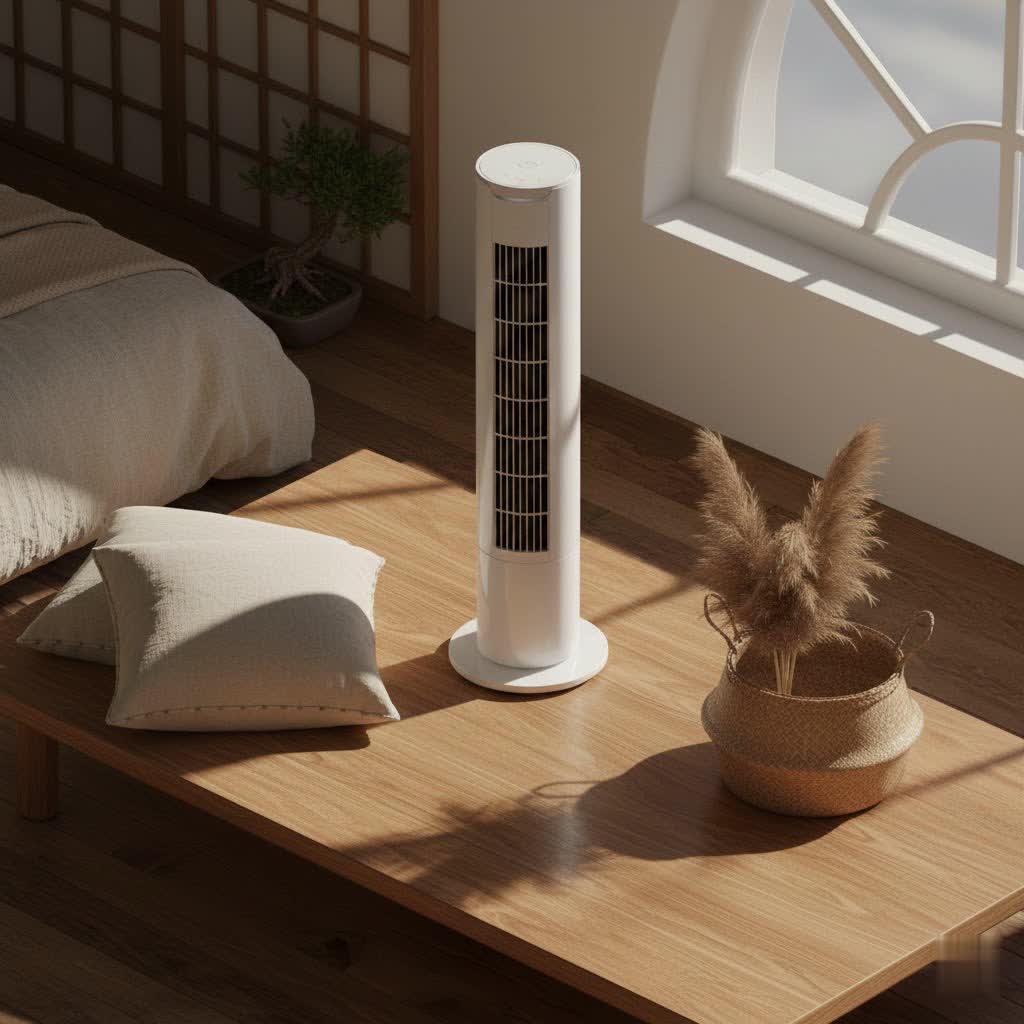
A slimline tower fan is characterized by its tall, slender, vertical design, a stark contrast to the traditional circular fans. This minimalist aesthetic allows it to blend seamlessly into modern interiors, making it a favorite for those who prioritize both function and form. Unlike bulky pedestal or box fans, a tower fan’s slim profile ensures it fits effortlessly into tight corners, alongside furniture, or in narrow hallways without obstructing your space.
At its core, a tower fan operates using an internal cylindrical impeller, sometimes referred to as a “blower wheel.” This impeller draws air in from vents, typically located at the rear or sides of the unit, and then propels it vertically through a long, narrow front outlet. Most models feature oscillation, allowing the fan to rotate from side to side, which helps distribute a consistent and widespread breeze across a broader area of the room. Many modern slimline tower fans also feature concealed blades, offering an added layer of safety, especially in households with curious children or pets.
Advantages and Disadvantages of Slimline Tower Fans
Choosing the right fan involves weighing its benefits against its limitations. Slimline tower fans, while incredibly popular, have their own set of pros and cons that are important to consider.
Pros of Slimline Tower Fans
Slimline tower fans are a popular choice for many due to their distinctive benefits:
- Space-Saving Design: The most obvious advantage is their vertical, compact footprint. They are perfect for apartments, small rooms, or crowded offices where floor space is a premium.
- Quiet Operation: Many tower fans are engineered for low-noise performance, especially on lower settings, making them ideal for bedrooms, nurseries, or workspaces where peace and quiet are essential.
- Energy Efficiency: Compared to energy-intensive air conditioning units, tower fans consume significantly less electricity, offering a more cost-effective way to stay cool and helping to reduce your energy bills.
- Aesthetic Appeal: Their sleek, contemporary design allows them to integrate smoothly with modern decor, enhancing the visual appeal of a room rather than being an eyesore.
- Even Air Distribution: With their oscillating feature, tower fans are adept at circulating air widely and evenly throughout a room, preventing hot spots and ensuring consistent comfort for multiple occupants.
- Advanced Features: Modern slimline tower fans often come packed with convenient features such as remote controls, multiple speed settings, programmable timers, and various modes like “sleep” or “natural breeze” for customized comfort.
- Enhanced Safety: Many tower fans feature concealed or bladeless designs, significantly reducing the risk of accidental contact with moving parts, making them a safer option for homes with children and pets.
|
Our Picks for the Best Tower Fan in 2026
As an Amazon Associate I earn from qualifying purchases.
|
||
| Num | Product | Action |
|---|---|---|
| 1 | Dreo Tower Fan for Bedroom, 90° Oscillating Standing Fans for Room with 4 Speeds, 3 Modes, 28dB Quiet for Sleep, 25ft/s Velocity, 8H Timer, Remote, Living Room, Office, Home, Black, TF117 - for Bedroom, for Room, for Sleep, 25ft/s Velocity, Living Room, Office, Home, Black |

|
| 2 | LEVOIT Tower Fan for Bedroom, 25ft/s Velocity Standing Fan with 28dB Quiet for Sleep, Remoter, 12H Timer, 5 Speeds, 4 Modes, 90° Oscillation for Home, Office, Indoor, Bladeless 36 inch, White |
|
| 3 | Dreo Tower Fan for Bedroom, 25ft/s Velocity Quiet Floor Fan, 90° Oscillating Fans for Indoors with 4 Speeds, 4 Modes, 8H Timer, Standing Fans, Bladeless Fan, White, Nomad One (DR-HTF007) |
|
| 4 | Xcity TP09Pro Bladeless Tower Fan, 3-in-1 Air Purifier, Space Heater & Cooling Fan, HEPA H13 Filtration, Remote & Touch Control, Ultra-Quiet DC Motor for Bedroom & Home Office |
|
| 5 | Dreo Tower Fan for Bedroom, 25ft/s Velocity Quiet Floor Fan, 90° Oscillating Fans for Indoors with 4 Speeds, 4 Modes, 8H Timer, Standing Fans, Bladeless Fan, Black, Nomad One (DR-HTF007) |
|
| 6 | Amazon Basics 28" 60-Degree Oscillating Tower Fan for Bedroom, Living Room, Office, With 3 Speeds, Intuitive Mechanical Control, Black, 35W, 27.8"H x 9.4"D x 9.4"W |
|
| 7 | LEVOIT Classic 36 inch Tower Fan for Bedroom, 25ft/s Airflow Standing Fan that Blows Cold Air for Home, 90° Oscillation, Quiet 28dB, Remote, 12H Timer, 5 Speeds, 4 Modes with Smart Sensor, Black |
|
| 8 | Tower Heater Fan with 4L Humidifier, 1800W Heating/Cooling, 2 Heat Levels, 3 Fan Speeds, 120° Oscillation, Indoor Space Heater with Timer & Safety Lock |
|
| 9 | Dreo Tower Fan for Bedroom, 4 Speeds, 3 Modes Standing Fans for Room with 90° wide Oscillating, 28dB Quiet for Sleep, 25ft/s Velocity, 29ft Coverage, 8H Timer, Remote, Living Room, Office, Home, White |
|
| 10 | Dreo Tower Fan for Bedroom, 4 Speeds, 3 Modes Standing Fans for Room with 90° wide Oscillating, 28dB Quiet for Sleep, 25ft/s Velocity, 29ft Coverage, 8H Timer, Remote, Living Room, Office, Home, Grey |
|
Cons of Slimline Tower Fans
Despite their many benefits, slimline tower fans do have certain drawbacks:
- Limited Cooling Power: It’s crucial to remember that tower fans circulate air rather than actively cooling it like an air conditioner. While they create a refreshing wind-chill effect, they won’t lower the ambient temperature of a room, which might not be sufficient on extremely hot or humid days.
- Shorter Airflow Range: While oscillation helps distribute air, the vertical airflow pattern might be less forceful and have a shorter reach compared to the direct, powerful blast from a pedestal fan. They are generally less effective in very large, open-concept spaces.
- Higher Initial Cost: Premium slimline tower fans, especially those with advanced features or bladeless technology, can come with a higher price tag than basic traditional fans, requiring a greater upfront investment.
- Less Directional Flexibility: Most tower fans offer fixed vertical airflow and rely primarily on oscillation. Unlike pedestal fans that can often be tilted up or down, the ability to direct airflow precisely can be limited.
- Maintenance Challenges: Due to their internal impeller design and narrow vents, cleaning dust buildup inside a tower fan can be more challenging and time-consuming compared to fans with exposed blades.
- Noise at Higher Speeds: While generally quiet on lower settings, some tower fans can become noticeably noisier at their highest speed settings as they work harder to move air.
Types of Slimline Tower Fans
The evolution of fan technology has led to several specialized types of slimline tower fans, each offering unique advantages for different user needs.
- Basic Oscillating Tower Fans: These are the most common type, providing essential air circulation with multiple speed settings and an oscillating function. They are generally more affordable and focus on core cooling functionality.
- Smart Tower Fans: Integrating with smart home ecosystems, these fans offer Wi-Fi connectivity, app control, and even voice activation. This allows users to adjust settings, schedule operation, or monitor conditions remotely, enhancing convenience and energy management.
- Bladeless Tower Fans: Pioneered by brands like Dyson, bladeless tower fans draw air into their base and then project a smooth, high-velocity stream of air from a circular or oval loop. This design offers enhanced safety, an ultra-modern aesthetic, and often a quieter operation with fewer noisy air choppiness.
- Tower Fans with Additional Functions: Beyond simple air movement, some advanced slimline tower fans incorporate features like built-in air purifiers with HEPA filters to remove allergens and pollutants, or humidifiers/misters to add moisture to dry air, effectively making them multi-functional climate control devices.
Popular Slimline Tower Fan Brands and Models
The market for slimline tower fans is robust, with several brands offering innovative solutions. Here’s a look at some of the most prominent players:
- Dyson: Renowned for its cutting-edge bladeless technology, Dyson tower fans offer premium design, powerful airflow, and often integrate air purification features. They are a significant investment but deliver superior performance and aesthetics.
- Dreo: A rising star, Dreo is praised for its powerful output, quiet operation, and smart features. Models like the Dreo Nomad One and Dreo Smart Tower Fan Pilot Max S are frequently cited for their strong performance and user-friendly designs.
- Lasko: A long-standing name in the fan industry, Lasko offers dependable and value-oriented tower fans. They are known for providing solid performance without breaking the bank, with models like the Lasko Wind Curve.
- Honeywell: Recognized for durability and a good balance of features, Honeywell tower fans often provide quiet operation and reliable cooling, making them a consistent choice for many households.
- Xiaomi: Entering the smart home appliance market, Xiaomi offers tower fans with minimalist designs, smart connectivity, and competitive pricing, appealing to tech-savvy consumers.
- Panasonic: A trusted electronics brand, Panasonic provides tower fans known for stable quality, decent features, and reliable performance at accessible price points.
Slimline Tower Fan Brand Comparison
Here’s a comparative overview of some popular brands and their typical characteristics:
| Feature | Dyson Tower Fan | Dreo Tower Fan | Honeywell Tower Fan | Panasonic Tower Fan | Xiaomi Tower Fan |
|---|---|---|---|---|---|
| Price | Premium/High | Mid-Range | Mid-Range | Affordable/Mid-Range | Competitive/Affordable |
| Technology | Bladeless, Air Purif. | Powerful airflow, Smart | QuietSet, Durability | Stable performance | Smart Home Integration |
| Design | Ultra-Sleek, Modern | Modern, Compact | Functional, Varied | Simple, Reliable | Minimalist, Smart |
| Noise Level | Low (Bladeless) | Low to Medium | Low (QuietSet) | Medium | Low |
| Durability | High | High | High | Good | Good |
How to Choose the Perfect Slimline Tower Fan
Selecting the ideal slimline tower fan for your home involves considering several factors to ensure it meets your specific cooling needs and lifestyle.
- Room Size and CFM: The effectiveness of a fan largely depends on its power relative to your room size. CFM (Cubic Feet per Minute) indicates how much air a fan can move. For small rooms (under 150 sq ft), a CFM of 1000-1500 might suffice, while larger rooms (over 250 sq ft) could require 3000-5000 CFM or more. Matching the fan’s output to your space is crucial for efficient cooling.
- Oscillation Angle: A wider oscillation angle means the fan can cover a larger area. For bigger rooms or to cool multiple people, look for models with 90 degrees or more of oscillation. Some advanced models offer even wider angles or directional louvers.
- Speed Settings and Modes: More speed settings (ideally three or more) provide greater control over airflow intensity. Different modes, such as “sleep” for ultra-quiet operation, “natural breeze” for varying airflow, or “eco” for energy saving, enhance comfort and versatility.
- Noise Level: For bedrooms, nurseries, or home offices, a quiet fan is paramount. Many manufacturers specify decibel levels, or you can check reviews for user feedback on noise. Features like “QuietSet” technology are designed to minimize operational sounds.
- Smart Features and Controls: Remote controls offer convenience, allowing you to adjust settings from across the room. For tech enthusiasts, Wi-Fi and voice-controlled smart fans provide seamless integration into a connected home. Timers are also beneficial for setting auto shut-off, saving energy.
- Air Purification/Ionization: If allergies or air quality are a concern, consider tower fans that include built-in air filters or ionizers. These features can help trap dust, pet dander, and other airborne particles, improving the overall air quality in your space.
- Ease of Cleaning: Dust accumulation is inevitable. Look for models with removable grilles or easy-to-wipe surfaces. Bladeless designs often simplify cleaning, as there are no intricate blades to meticulously dust.
- Budget Considerations: Slimline tower fans range widely in price. Determine your budget beforehand and prioritize the features most important to you. Sometimes, a slightly higher initial investment in a durable, feature-rich model can lead to greater satisfaction and long-term savings.
- Brand Reputation and Warranty: Opt for reputable brands known for quality and reliability. Check the warranty period and customer service support to ensure you’re covered in case of any issues.
Maximizing Your Comfort: Usage and Maintenance Tips
To ensure your slimline tower fan provides optimal cooling and lasts for years to come, proper usage and regular maintenance are key.
- Optimal Placement: Position your fan in a clear, unobstructed area to allow for maximum airflow. Avoid placing it directly against walls or behind large furniture that could block air intake or output. Placing it near an open window can help draw in cooler outside air in the evenings.
- Regular Cleaning: Dust can accumulate quickly within the fan’s grilles and on the internal impeller, reducing efficiency and potentially circulating allergens.
- For external surfaces, simply wipe down the fan with a soft, damp cloth.
- For internal cleaning, consult your fan’s manual. Many models allow for partial disassembly or have removable filters for easier access. Use a vacuum cleaner with a brush attachment to carefully remove dust from vents and grilles.
- “Regular cleaning, especially of intricate designs, is necessary to prevent dust accumulation and maintain optimal performance.”
- Use Proper Voltage: Always ensure your fan is plugged into an electrical outlet that matches the voltage specified by the manufacturer to prevent damage to the unit and ensure safe operation.
- Avoid Overuse: While tower fans are energy-efficient, continuous operation for excessively long periods can wear down the motor. Utilize the timer function to set the fan to turn off after a certain period, especially when you’re sleeping or leaving a room.
- Off-Season Storage: When the cooling season ends, clean your fan thoroughly before storing it. Keep it in a dry, dust-free place, preferably in its original packaging or covered to protect it from dust and potential damage.
Slimline Tower Fans vs. Other Cooling Solutions
Understanding how slimline tower fans compare to other common cooling devices can help you make an informed decision for your specific needs.
Slimline Tower Fan vs. Pedestal Fan
Both tower and pedestal fans are popular choices for personal cooling, but they differ significantly in design and performance:
- Design and Space: Slimline tower fans are tall and narrow, taking up minimal floor space and offering a modern aesthetic, ideal for tight spots. Pedestal fans, with their traditional round head and wide base, require more floor space.
- Airflow: Pedestal fans generally offer a more powerful, direct, and far-reaching airflow due to their larger, exposed blades. Tower fans provide a gentler, more widespread, and even breeze, especially with oscillation.
- Adjustability: Pedestal fans typically offer greater flexibility with adjustable height and tilt functions, allowing you to direct the airflow precisely where needed. Tower fans usually have a fixed height and rely on oscillation to cover an area.
- Noise Level: Tower fans tend to be quieter, particularly at lower speeds, making them better suited for bedrooms and quiet environments. Pedestal fans can be noisier at higher settings due to their larger, faster-moving blades.
- Portability: Many tower fans are lightweight and feature integrated handles, making them highly portable and easy to move between rooms.
Slimline Tower Fan vs. Air Conditioner
It’s important to distinguish between air circulation and active cooling when comparing fans to air conditioners.
- Cooling Mechanism: A slimline tower fan circulates existing air, creating a wind-chill effect that makes you feel cooler. It does not lower the actual ambient temperature of the room. An air conditioner, on the other hand, actively removes heat and humidity from the air, thereby lowering the room’s temperature.
- Energy Consumption: Tower fans are significantly more energy-efficient and consume much less electricity than air conditioners, making them a more economical choice for daily use.
- Effectiveness: For truly hot and humid conditions where significant temperature reduction is needed, an air conditioner is superior. Tower fans are excellent for mild to moderate heat, improving air circulation, or for enhancing the effectiveness of an air conditioner by distributing cooled air.
- Complementary Use: Many people use tower fans in conjunction with air conditioners. The fan helps distribute the cooled air more efficiently throughout the room, allowing you to potentially set your AC thermostat a few degrees higher and save on energy without sacrificing comfort.
Conclusion
Slimline tower fans have carved a niche in the world of home cooling, offering a compelling blend of sleek aesthetics, space-saving design, and intelligent features. From their quiet operation to their ability to circulate air evenly across a room, they are an excellent choice for modern living, particularly in smaller spaces or as an energy-efficient alternative or complement to air conditioning. By considering your room size, desired features, and budget, you can confidently select a slimline tower fan that transforms your comfort and enhances your home. Are you ready to embrace the cool, minimalist comfort a slimline tower fan can bring to your everyday life?
Frequently Asked Questions
Are slimline tower fans worth the investment?
Yes, slimline tower fans are generally worth the investment, especially if you value space-saving design, quiet operation, and energy efficiency. They provide effective air circulation and often come with advanced features that enhance comfort, making them a valuable addition to most homes, particularly in small to medium-sized rooms.
How effective are tower fans in large rooms?
Slimline tower fans are typically best suited for small to medium-sized rooms. While their oscillation helps distribute air over a wider area, their overall cooling power and airflow range may be limited in very large or open-concept spaces. For optimal cooling in larger rooms, you might need a more powerful fan or multiple units.
Are bladeless tower fans better than traditional tower fans?
Bladeless tower fans, like those from Dyson, offer several advantages, including enhanced safety (no exposed blades), an ultra-sleek aesthetic, and often a smoother, quieter airflow due to their air multiplier technology. While they can be more expensive, many users find the added benefits in terms of safety, design, and performance justify the higher cost.
How often should I clean my tower fan?
It is recommended to clean your slimline tower fan regularly, ideally once a month during peak usage seasons, and before storing it for the off-season. Regular cleaning helps prevent dust buildup in the vents and on the internal components, ensuring optimal performance, maintaining air quality, and extending the lifespan of your fan.
Do tower fans consume a lot of electricity?
No, tower fans are generally considered energy-efficient. They consume significantly less electricity compared to air conditioning units, making them a cost-effective choice for cooling. Their low wattage allows them to run for extended periods without causing a substantial increase in your utility bills.
