As the mercury rises, the quest for effective and affordable cooling intensifies. While air conditioners offer powerful relief, their energy consumption often comes with a hefty price tag. This is where the energy efficient tower fan emerges as a compelling solution, offering a perfect blend of comfort, convenience, and cost savings. Designed to deliver a focused breeze with minimal power usage, these fans are not just an alternative to traditional cooling methods but a smart upgrade for any modern home seeking both comfort and sustainability.
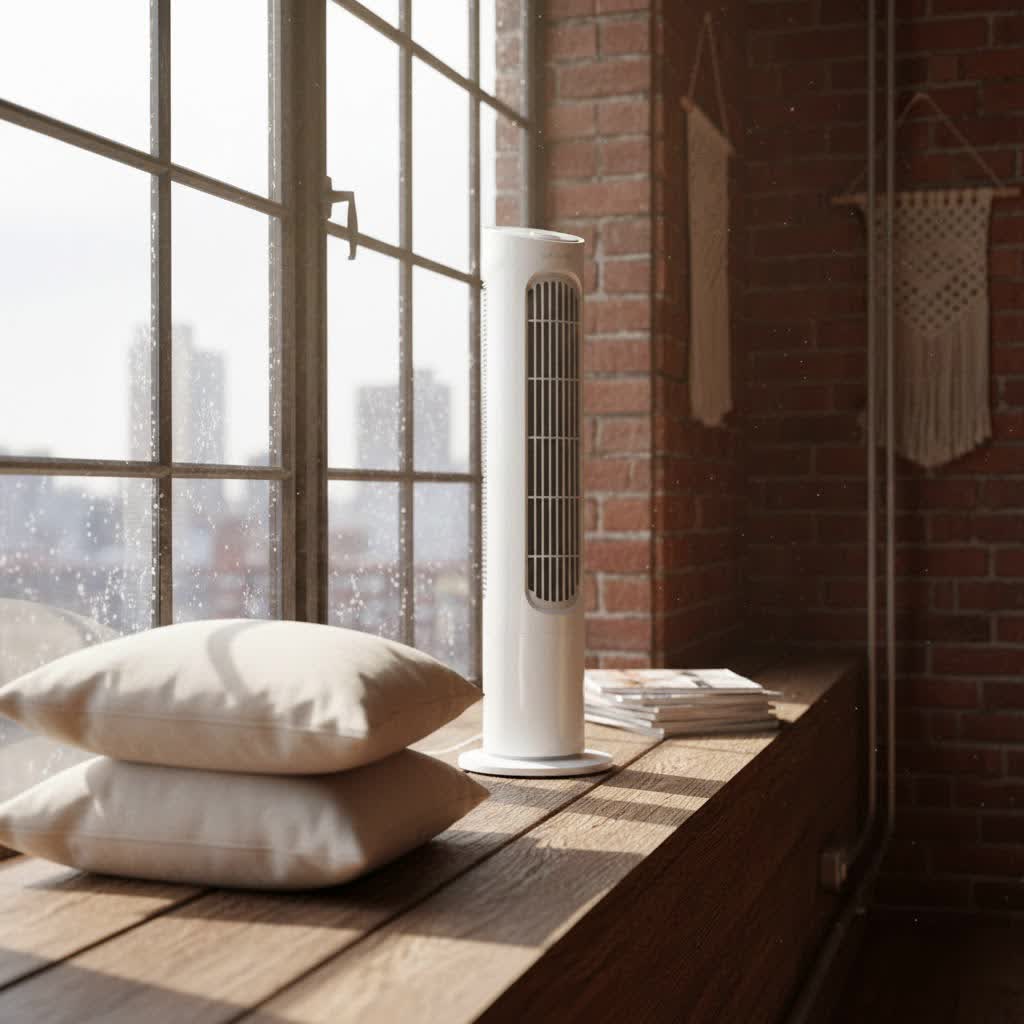
Tower Fans: Efficient Cooling for the Modern Home
Tower fans have become a staple in homes and offices, revered for their sleek, space-saving design and effective airflow distribution. But beyond aesthetics, their inherent design lends itself well to energy efficiency. Unlike traditional box or pedestal fans that often have bulkier motors and blades, tower fans typically use a vertical scroll cage design that allows for a narrower profile and a more directed airflow. When engineered with energy efficiency in mind, these devices can significantly reduce electricity consumption without compromising on cooling performance, offering a greener and more economical way to beat the heat.
Advantages and Disadvantages of Energy Efficient Tower Fans
Understanding the full scope of energy efficient tower fans involves weighing their benefits against their limitations.
-
Advantages:
- Compact Design: Their tall, slender profile occupies minimal floor space, making them ideal for smaller rooms or tight corners.
- Quiet Operation: Many energy-efficient models incorporate advanced motor technologies, such as DC motors, which contribute to significantly quieter performance compared to older or less efficient fans.
- Even Airflow: The oscillating design ensures a wide sweep of air, distributing coolness evenly across a room.
- Lower Running Costs: The primary benefit is reduced electricity consumption, leading to noticeable savings on utility bills.
- Eco-Friendly: By using less power, these fans contribute to a smaller carbon footprint, supporting environmental sustainability.
- Advanced Features: Often include remote controls, timers, multiple speed settings, sleep modes, and sometimes even smart connectivity.
-
Disadvantages:
- Initial Cost: Energy-efficient models, especially those with advanced features or premium brands, can have a higher upfront price than basic traditional fans.
- Cooling Capacity: While effective for personal use or small to medium rooms, they may not provide sufficient cooling for very large, open-plan spaces compared to air conditioning.
- Maintenance: Regular cleaning of the air intake and grille is necessary to maintain optimal airflow and efficiency.
|
Our Picks for the Best Tower Fan in 2026
As an Amazon Associate I earn from qualifying purchases.
|
||
| Num | Product | Action |
|---|---|---|
| 1 | Dreo Tower Fan for Bedroom, 4 Speeds, 3 Modes Standing Fans for Room with 90° wide Oscillating, 28dB Quiet for Sleep, 25ft/s Velocity, 29ft Coverage, 8H Timer, Remote, Living Room, Office, Home, White |

|
| 2 | Xcity TP09Pro Bladeless Tower Fan, 3-in-1 Air Purifier, Space Heater & Cooling Fan, HEPA H13 Filtration, Remote & Touch Control, Ultra-Quiet DC Motor for Bedroom & Home Office |
|
| 3 | LEVOIT Tower Fan for Bedroom, 25ft/s Velocity Standing Fan with 28dB Quiet for Sleep, Remoter, 12H Timer, 5 Speeds, 4 Modes, 90° Oscillation for Home, Office, Indoor, Bladeless 36 inch, White |
|
| 4 | Dreo Tower Fan for Bedroom, 90° Oscillating Standing Fans for Room with 4 Speeds, 3 Modes, 28dB Quiet for Sleep, 25ft/s Velocity, 8H Timer, Remote, Living Room, Office, Home, Black, TF117 - for Bedroom, for Room, for Sleep, 25ft/s Velocity, Living Room, Office, Home, Black |
|
| 5 | Tower Heater Fan with 4L Humidifier, 1800W Heating/Cooling, 2 Heat Levels, 3 Fan Speeds, 120° Oscillation, Indoor Space Heater with Timer & Safety Lock |
|
| 6 | Dreo Tower Fan for Bedroom, 4 Speeds, 3 Modes Standing Fans for Room with 90° wide Oscillating, 28dB Quiet for Sleep, 25ft/s Velocity, 29ft Coverage, 8H Timer, Remote, Living Room, Office, Home, Grey |
|
| 7 | Dreo Tower Fan for Bedroom, 25ft/s Velocity Quiet Floor Fan, 90° Oscillating Fans for Indoors with 4 Speeds, 4 Modes, 8H Timer, Standing Fans, Bladeless Fan, Black, Nomad One (DR-HTF007) |
|
| 8 | Amazon Basics 28" 60-Degree Oscillating Tower Fan for Bedroom, Living Room, Office, With 3 Speeds, Intuitive Mechanical Control, Black, 35W, 27.8"H x 9.4"D x 9.4"W |
|
| 9 | Dreo Tower Fan for Bedroom, 25ft/s Velocity Quiet Floor Fan, 90° Oscillating Fans for Indoors with 4 Speeds, 4 Modes, 8H Timer, Standing Fans, Bladeless Fan, White, Nomad One (DR-HTF007) |
|
| 10 | LEVOIT Classic 36 inch Tower Fan for Bedroom, 25ft/s Airflow Standing Fan that Blows Cold Air for Home, 90° Oscillation, Quiet 28dB, Remote, 12H Timer, 5 Speeds, 4 Modes with Smart Sensor, Black |
|
Types of Energy Efficient Tower Fans
The market offers a diverse range of energy efficient tower fans, each catering to different preferences and needs.
- Basic Mechanical Tower Fans: These models are straightforward, featuring simple dial or button controls for speed and oscillation. While lacking advanced features, their basic efficiency can still be better than older fan types.
- Remote-Controlled Tower Fans: Adding convenience, these fans allow users to adjust settings from across the room, often including timers and various breeze modes.
- Smart Tower Fans (Wi-Fi Enabled): Integrating with smart home ecosystems, these fans can be controlled via smartphone apps or voice assistants. They often feature adaptive modes, scheduling, and energy consumption monitoring.
- DC Motor Tower Fans: Fans equipped with DC (Direct Current) motors are inherently more energy-efficient than those with traditional AC (Alternating Current) motors. They offer finer speed control and operate much quieter.
- Bladeless Tower Fans: While often associated with premium brands like Dyson, bladeless fans push air through an aperture. Many of these are highly energy-efficient and offer a sleek, safer design that’s easier to clean.
Comparing Noteworthy Brands of Energy Efficient Tower Fans
Several brands stand out in the energy efficient tower fan segment, each with unique strengths.
- Dyson: Renowned for innovative bladeless designs, Dyson fans offer advanced air multiplication technology, exceptional energy efficiency, and premium aesthetics. Their models often include air purification features. While highly effective and quiet, they come at a higher price point.
- Honeywell: A trusted name in home comfort, Honeywell offers a range of durable and feature-rich tower fans. Many models focus on robust airflow, quiet operation, and include programmable thermostats or sleep modes, balancing performance with energy savings at a mid-range price.
- Lasko: Lasko provides a wide selection of affordable tower fans, often featuring strong air delivery, multiple speeds, and oscillation. While not always the absolute quietest, many Lasko models offer good energy efficiency for their price point, making them a popular budget-friendly option.
- Dreo: Gaining popularity, Dreo focuses on combining powerful airflow with quiet operation and energy efficiency. Their fans often incorporate advanced aerodynamic designs and DC motors, offering a compelling blend of performance, modern features, and competitive pricing.
- Vornado: Known for its “vortex action” technology, Vornado fans excel at circulating air throughout an entire room, rather than just blowing air directly. Many of their tower fans are highly energy-efficient due to this superior air circulation capability, providing thorough cooling.
Comprehensive Tower Fan Comparison
| Feature | Dyson Tower Fans | Honeywell Tower Fans | Lasko Tower Fans | Dreo Tower Fans | Vornado Tower Fans |
|---|---|---|---|---|---|
| Price Range | Premium | Mid-range | Budget-friendly | Mid-range | Upper Mid-range |
| Technology | Bladeless, Air Multiplier, Air Purification (some models) | Robust airflow, programmable, remote | Strong airflow, basic controls | DC Motor, advanced aerodynamics, quiet | Vortex air circulation |
| Design | Sleek, minimalist, modern | Functional, varied | Practical, diverse | Modern, compact | Distinctive, air-focused |
| Noise Level | Very Low | Low to Medium | Medium | Low | Low to Medium |
| Durability | High | High | Good | High | High |
| Key Benefit | Quiet, effective, air quality | Reliable, feature-rich | Value for money | Powerful, quiet, efficient | Whole-room circulation |
Guide to Choosing the Right Energy Efficient Tower Fan
Selecting the perfect energy efficient tower fan involves considering several factors to match your specific needs.
- Determine Your Space and Needs:
- Room Size: For larger rooms, look for fans with higher CFM (Cubic Feet per Minute) ratings or powerful whole-room circulation capabilities like Vornado. For smaller spaces, most standard tower fans suffice.
- Usage Purpose: Is it for personal cooling at a desk, general room cooling, or to supplement an AC? This will influence the required power and features.
- Set Your Budget: Energy-efficient fans vary widely in price. Decide how much you’re willing to invest, remembering that a higher upfront cost for a truly efficient model often pays off in energy savings.
- Prioritize Key Features:
- DC Motor: Essential for maximum energy efficiency and quiet operation.
- Timer & Sleep Mode: Allows you to set the fan to turn off automatically, saving power while you sleep or when you leave the room.
- Multiple Speed Settings: Offers flexibility to choose the perfect airflow intensity, using less power on lower settings.
- Oscillation: Ensures wide air distribution, maximizing the fan’s cooling reach.
- Smart Features: Wi-Fi connectivity, app control, and voice assistant integration enhance convenience and can optimize usage patterns for efficiency.
- Consider Brand Reputation & Warranty: Opt for reputable brands known for quality and customer support. A good warranty provides peace of mind regarding your investment.
- Read User Reviews: Real-world feedback can offer invaluable insights into a fan’s actual performance, noise level, and energy efficiency.
Tips for Using and Maintaining Your Energy Efficient Tower Fan
To maximize the performance and longevity of your energy efficient tower fan, proper usage and regular maintenance are crucial.
- Strategic Placement: Position the fan in a spot where it can draw in cooler air and circulate it effectively, such as near an open window in the evening or opposite an open door. Avoid placing it in direct sunlight.
- Utilize Features: Make full use of timers to avoid unnecessary operation, and use sleep or ECO modes, which automatically adjust fan speed to conserve energy.
- Combine with AC: Using a tower fan in conjunction with an air conditioner can allow you to raise your AC’s thermostat setting by a few degrees without sacrificing comfort, significantly reducing AC energy consumption.
- Regular Cleaning: Dust and debris can accumulate on the air intake vents and internal components, impeding airflow and forcing the motor to work harder, thus reducing efficiency. Refer to your manual for specific cleaning instructions, typically involving wiping down exterior surfaces and occasionally vacuuming or disassembling the grille for deeper cleaning.
- Store Properly: When not in use, especially during off-seasons, store your fan in a dry, dust-free place to protect its components.
Tower Fans vs. Other Cooling Solutions
Understanding how tower fans stack up against other common cooling devices can help you make an informed decision.
- Tower Fan vs. Pedestal Fan: While both offer oscillation and multiple speeds, tower fans generally have a smaller footprint and often a more modern aesthetic. Energy-efficient tower fans frequently incorporate advanced features like DC motors and smart controls that are less common in basic pedestal fans, leading to better power consumption.
- Tower Fan vs. Air Conditioner: This is not an “either/or” situation for many. Air conditioners provide true refrigeration, lowering the ambient temperature, which tower fans cannot do. However, ACs consume significantly more electricity. Tower fans are ideal for personal cooling, small to medium rooms, or as an energy-saving supplement to an AC. For maximum energy efficiency, a tower fan is almost always the more economical choice for daily operation, especially when the goal is to feel cooler rather than to dramatically drop room temperature.
“Investing in an energy efficient tower fan with a DC motor can save you hundreds on electricity bills over its lifetime, often paying for itself within a few seasons. It’s a smart choice for both your wallet and the planet.” – Alex Chen, HVAC & Home Appliance Specialist
Conclusion
The energy efficient tower fan represents a smart and sustainable choice for modern cooling. By combining sleek design with advanced power-saving technologies, these fans offer a compelling solution for staying comfortable without the high energy costs associated with traditional air conditioning. From reducing your carbon footprint to lowering your utility bills, the benefits are clear. When making your selection, prioritize models with DC motors, smart features, and strong airflow capabilities to ensure you’re investing in a device that truly delivers on its promise of efficient, effective cooling.
What factors are most important to you when considering an energy-efficient cooling solution for your home?
Frequently Asked Questions
Are energy efficient tower fans truly effective in cooling a room?
Energy efficient tower fans excel at creating a strong, focused airflow that enhances comfort by circulating air and creating a wind chill effect. While they don’t lower the ambient temperature like an air conditioner, many models, especially those with powerful DC motors or whole-room circulation designs, can significantly improve thermal comfort in small to medium-sized spaces and feel remarkably effective.
How much electricity does an energy efficient tower fan typically consume?
Most energy efficient tower fans consume between 20 to 60 watts, depending on the speed setting and specific model, with DC motor fans generally being at the lower end of this range. This is substantially less than a typical window air conditioner, which can use 500 to 1500 watts, making tower fans a far more economical option for daily operation.
Can an energy efficient tower fan replace an air conditioner?
An energy efficient tower fan cannot entirely replace an air air conditioner in terms of cooling capacity, as it does not cool the air itself but rather circulates it. However, for mild to moderate heat, personal cooling, or supplementing an AC (allowing you to raise the AC’s thermostat), an energy efficient tower fan is a highly effective, cost-saving, and eco-friendly alternative.
What is a DC motor, and why is it important for an energy efficient tower fan?
A DC (Direct Current) motor is a type of electric motor that operates on direct current, offering superior energy efficiency, quieter operation, and more precise speed control compared to traditional AC (Alternating Current) motors. For an energy efficient tower fan, a DC motor translates to significantly lower power consumption, a quieter breeze, and a wider range of fan speeds.
How do I maintain my energy efficient tower fan for optimal performance?
To ensure optimal performance and longevity, regularly clean your energy efficient tower fan by wiping down its exterior with a damp cloth and gently vacuuming or dusting the air intake grilles to prevent dust buildup. Always consult your specific model’s manual for detailed cleaning instructions, and ensure the fan is unplugged before any maintenance.
