In our fast-paced world, a peaceful home environment is a true sanctuary. Yet, when summer heat demands relief, the persistent hum of a traditional fan can often disrupt this tranquility. If you’ve ever yearned for a cooling breeze that doesn’t compete with your thoughts, sleep, or conversations, then a most quiet tower fan is your ideal solution. These innovative devices offer effective cooling without the distracting noise, transforming your living space into a calm, comfortable haven. This guide will explore everything you need to know to choose the perfect whisper-quiet tower fan, ensuring your comfort is never compromised.
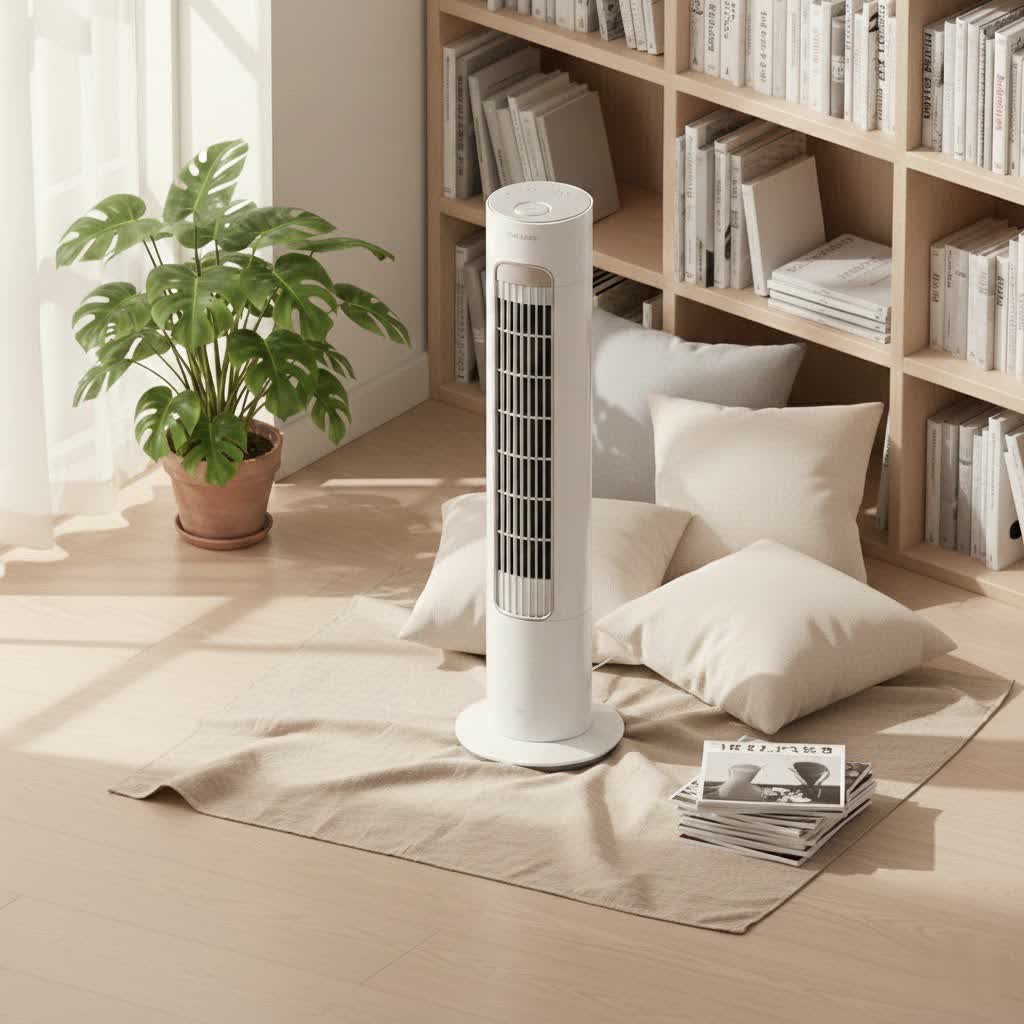
What Makes a Tower Fan Quiet?
The quest for silence in a cooling device often begins with understanding its internal mechanisms. Several factors contribute to a tower fan’s ability to operate quietly, distinguishing it from its noisier counterparts.
Firstly, the motor type plays a crucial role. Many quiet tower fans utilize brushless DC (direct current) motors, which are inherently more efficient and produce less friction and vibration compared to traditional AC (alternating current) motors. This results in a smoother, quieter operation. Secondly, the design of the blades and air channeling system is critical. Unlike traditional fans with exposed, rapidly spinning blades that chop through air, tower fans often have internal, aerodynamically optimized impellers. This enclosed design, sometimes even bladeless, significantly reduces air turbulence and mechanical noise. Lastly, the overall construction and material quality contribute to sound dampening, preventing rattles and vibrations that can amplify noise. When evaluating a quiet tower fan, look for models that boast decibel (dB) ratings, typically aiming for anything between 25 and 45 decibels, which is comparable to a soft whisper or a quiet library.
Advantages and Disadvantages of Quiet Tower Fans
Choosing a quiet tower fan brings a host of benefits, particularly for noise-sensitive environments, but it’s also important to consider potential drawbacks.
Advantages:
- Undisturbed Peace: The primary benefit is the ability to enjoy a cool breeze without the distracting noise. This is invaluable for bedrooms, home offices, nurseries, or any space where concentration or restful sleep is paramount. You can work, study, or sleep without a loud fan disrupting your focus or dreams.
- Enhanced Comfort: Many quiet models come with “sleep modes” or “night settings” that dim displays, mute button sounds, and reduce fan speed to an almost imperceptible hum, further contributing to a comfortable nighttime environment.
- Energy Efficiency: DC motors, often found in quieter models, tend to be more energy-efficient than traditional AC motors, potentially leading to lower electricity bills over time.
- Sleek and Space-Saving Design: Tower fans are known for their slim, vertical profile, making them ideal for tight corners or small rooms where a bulkier fan might be intrusive. Their modern aesthetics often blend seamlessly with contemporary decor.
- Advanced Features: Quiet tower fans frequently incorporate smart features such as remote controls, programmable timers, multiple speed settings, oscillation, and sometimes even air purification or ionizer functions for improved air quality.
|
Our Picks for the Best Tower Fan in 2026
As an Amazon Associate I earn from qualifying purchases.
|
||
| Num | Product | Action |
|---|---|---|
| 1 | LEVOIT Classic 36 inch Tower Fan for Bedroom, 25ft/s Airflow Standing Fan that Blows Cold Air for Home, 90° Oscillation, Quiet 28dB, Remote, 12H Timer, 5 Speeds, 4 Modes with Smart Sensor, Black |

|
| 2 | Dreo Tower Fan for Bedroom, 4 Speeds, 3 Modes Standing Fans for Room with 90° wide Oscillating, 28dB Quiet for Sleep, 25ft/s Velocity, 29ft Coverage, 8H Timer, Remote, Living Room, Office, Home, White |
|
| 3 | Dreo Tower Fan for Bedroom, 25ft/s Velocity Quiet Floor Fan, 90° Oscillating Fans for Indoors with 4 Speeds, 4 Modes, 8H Timer, Standing Fans, Bladeless Fan, Black, Nomad One (DR-HTF007) |
|
| 4 | LEVOIT Tower Fan for Bedroom, 25ft/s Velocity Standing Fan with 28dB Quiet for Sleep, Remoter, 12H Timer, 5 Speeds, 4 Modes, 90° Oscillation for Home, Office, Indoor, Bladeless 36 inch, White |
|
| 5 | Xcity TP09Pro Bladeless Tower Fan, 3-in-1 Air Purifier, Space Heater & Cooling Fan, HEPA H13 Filtration, Remote & Touch Control, Ultra-Quiet DC Motor for Bedroom & Home Office |
|
| 6 | Dreo Tower Fan for Bedroom, 25ft/s Velocity Quiet Floor Fan, 90° Oscillating Fans for Indoors with 4 Speeds, 4 Modes, 8H Timer, Standing Fans, Bladeless Fan, White, Nomad One (DR-HTF007) |
|
| 7 | Dreo Tower Fan for Bedroom, 4 Speeds, 3 Modes Standing Fans for Room with 90° wide Oscillating, 28dB Quiet for Sleep, 25ft/s Velocity, 29ft Coverage, 8H Timer, Remote, Living Room, Office, Home, Grey |
|
| 8 | Amazon Basics 28" 60-Degree Oscillating Tower Fan for Bedroom, Living Room, Office, With 3 Speeds, Intuitive Mechanical Control, Black, 35W, 27.8"H x 9.4"D x 9.4"W |
|
| 9 | Dreo Tower Fan for Bedroom, 90° Oscillating Standing Fans for Room with 4 Speeds, 3 Modes, 28dB Quiet for Sleep, 25ft/s Velocity, 8H Timer, Remote, Living Room, Office, Home, Black, TF117 - for Bedroom, for Room, for Sleep, 25ft/s Velocity, Living Room, Office, Home, Black |
|
| 10 | Tower Heater Fan with 4L Humidifier, 1800W Heating/Cooling, 2 Heat Levels, 3 Fan Speeds, 120° Oscillation, Indoor Space Heater with Timer & Safety Lock |
|
Disadvantages:
- Higher Initial Cost: Premium quiet tower fans, especially those with advanced technology like bladeless designs or smart features, often come with a higher price tag than basic, noisier models.
- Limited Cooling Power in Very Large Spaces: While many quiet tower fans are effective for small to medium rooms, some models might not offer the same sheer volume of powerful airflow needed for exceptionally large, open-concept areas compared to their louder, more industrial counterparts.
- Regular Cleaning Required: To maintain optimal performance and quiet operation, tower fans require regular cleaning, particularly around air intake vents and internal components, as dust buildup can impede airflow and increase noise.
Types of Quiet Tower Fans
The market offers a diverse range of quiet tower fans, each designed with specific features to cater to different preferences and needs.
- Standard Quiet Tower Fans: These models prioritize low noise output through optimized motor and blade design, often featuring multiple speed settings, timers, and oscillation for widespread air distribution. Many include a dedicated “sleep mode” for ultra-quiet nighttime operation.
- Bladeless Quiet Tower Fans: Recognized for their futuristic design and enhanced safety, bladeless fans circulate air through an aperture, amplifying it to create a smooth, powerful, and remarkably quiet airflow. Their internal mechanisms are typically well-engineered for minimal noise. Brands like Dyson are prominent in this category.
- Smart Quiet Tower Fans: Integrating with smart home ecosystems, these fans offer control via smartphone apps, voice assistants (like Alexa or Google Assistant), and often feature adaptive modes that adjust speed based on room temperature, ensuring optimal quiet cooling with minimal manual intervention.
- Quiet Tower Fans with Air Purification/Ionization: Some advanced models combine quiet airflow with air purification capabilities. They may include HEPA filters to capture allergens and pollutants or ionizers that release negative ions to freshen the air, adding health benefits to your silent cooling experience. Examples include the Dyson Purifier Cool Auto React or Dimplex Ion Fresh Cooling Tower Fan.
Top Brands for Quiet Tower Fans
Several brands have distinguished themselves in the quiet tower fan market, offering models that consistently receive high marks for low noise and effective cooling.
- Dyson: Known for its innovative bladeless technology and premium design, Dyson produces some of the quietest and most efficient tower fans, often integrating air purification. The Dyson Purifier Cool Auto React is a prime example, achieving full marks on decibel tests.
- Dreo: This brand is highly recommended for combining performance, quiet operation, and often smart features at competitive price points. Models like the Dreo Tower Fan Nomad One and Dreo Smart Tower Fan Pilot Max S are frequently praised for their low decibel ranges (e.g., 25-48 dB) and powerful airflow. The Dreo Cruiser Pro T1 is also noted for its quietly powerful performance.
- Honeywell: A trusted name in home comfort, Honeywell offers reliable quiet tower fans, particularly in its QuietSet series. The Honeywell QuietSet Whole Room Tower Fan and the compact Honeywell 13 Inch Quiet Set Mini Tower Fan are celebrated for their very quiet operation and user-friendly controls.
- Levoit: Offering a balance of power and affordability, the Levoit Classic Tower Fan is recognized for its relatively quiet performance across its 12 speed settings, making it a strong contender for those seeking value.
- Lasko: Lasko provides dependable tower fans, with models like the Lasko Wind Curve and Lasko 36-Inch 3-Speed Oscillating Tower Fan noted for being very quiet, especially in sleep modes, and offering powerful air movement.
- Beldray: The Beldray 2-in-1 Bladeless Fan & Heater is an affordable bladeless option that testers found very quiet, even on higher settings, making it suitable for smaller spaces.
- Meaco: With a focus on ultra-quiet operation, Meaco’s Sefte air circulators are lauded for being virtually silent at lower speeds, with claims of operating as low as 27 dB.
- Paris Rhône: The Paris Rhône Tower Fan TF001 is highlighted for its superior noise reduction, achieving a mere 28 decibels, which is lower than most normal conversations.
Comparison Table: Popular Quiet Tower Fan Models
| Model | Price Range | Noise Level (dB) | Key Features | Best For |
|---|---|---|---|---|
| Dyson Purifier Cool Auto React | Premium | < Background | Air purification, 350° oscillation, 10 speeds | All-round purification & quiet cooling |
| Dreo Tower Fan Nomad One | Mid-range/Budget | 34-48 | Sleep mode, auto mode, 90° oscillation, powerful CFM | Bedrooms, quiet & effective cooling |
| Honeywell QuietSet Whole Room | Budget/Mid-range | Very low hum | 5 QuietSet speeds, sleep mode, auto-dimming, remote | Bedrooms, white noise, consistent quietness |
| Levoit Classic Tower Fan | Budget/Mid-range | Relatively quiet | 12 speeds, powerful airflow, remote, LED display | Value, reliable power, quiet operation |
| Paris Rhône Tower Fan TF001 | Mid-range | 28 | Analog natural wind, superior noise reduction | Ultra-quiet environments, light sleepers |
| Lasko 36-Inch 3-Speed | Budget | 40-55 | Dark mode, 60° oscillation, remote, integrated handle | Small to medium rooms, budget-conscious buyers |
| Beldray 2-in-1 Bladeless | Mid-range | Very quiet | Bladeless, 9 speeds, 3 modes, built-in heater, ambient light | Smaller spaces, year-round use, safety |
Note: Decibel levels can vary based on speed setting; listed values typically represent lower settings.
How to Choose the Most Quiet Tower Fan for Your Space
Selecting the perfect quiet tower fan requires careful consideration of your specific needs and environment. Here’s a guide to help you make an informed decision:
- Determine Your Room Size and Airflow Needs (CFM): While tower fans are generally good for small to medium rooms, larger spaces require higher Cubic Feet per Minute (CFM) ratings. For rooms under 200 square feet, a fan with up to 3,000 CFM is sufficient. For 200-300 square feet, target 3,000-4,000 CFM. For 300-450 square feet, aim for 4,000-6,000 CFM. For rooms over 450 square feet, look for fans with 6,000-10,000 CFM or consider pairing multiple fans. Understand that higher CFM often correlates with higher noise, so find a balance that suits your quiet preference.
- Prioritize Decibel (dB) Rating: For truly quiet operation, look for models that list their decibel range. Aim for fans that operate between 25 decibels (quieter than a whisper) and 45 decibels (similar to a library or quiet conversation), especially on lower settings. Some models offer specific “sleep modes” that guarantee the lowest possible noise output.
- Evaluate Features for Comfort and Convenience:
- Multiple Speed Settings: A wider range of speeds allows for precise control over airflow and noise.
- Oscillation: Essential for distributing air evenly across a room. Consider the oscillation angle (e.g., 90° for bedrooms, 120°+ for larger areas).
- Timer Functions: Useful for setting the fan to turn off automatically after a certain period, conserving energy, and ensuring undisturbed sleep.
- Remote Control & Smart Connectivity: These features offer convenience, allowing you to adjust settings without leaving your bed or desk. App control or voice assistant compatibility adds a modern touch.
- Sleep Mode/Display Dimming: Key for bedroom use, these features reduce noise and light distractions.
- Air Purification/Ionization: If air quality is a concern, some quiet tower fans offer these added benefits.
- Consider Your Budget: Quiet tower fans come in various price points. While premium models like Dyson offer advanced features and ultra-quiet performance, many mid-range and budget-friendly options from brands like Dreo, Honeywell, and Levoit still deliver excellent quiet cooling.
- Design and Aesthetics: Tower fans are designed to be visually appealing and blend into your decor. Choose a style and color that complements your space.
- Ease of Cleaning and Maintenance: Look for models with removable rear grills or bladeless designs, as these are often easier to clean, which is vital for maintaining efficiency and quiet operation.
Tips for Using and Maintaining Your Quiet Tower Fan
To maximize the performance and longevity of your most quiet tower fan, follow these simple usage and maintenance tips:
- Optimal Placement: Position your tower fan in a strategic location to promote effective air circulation. Avoid placing it directly against walls or in cluttered areas that could obstruct airflow. For maximum cooling, consider placing it near an open window or in front of an air conditioner to help distribute cool air more efficiently.
- Regular Cleaning is Key: Dust and debris can accumulate on internal components and air intake vents, reducing airflow and increasing noise levels. Regularly wipe down the exterior with a soft cloth. For models with removable grills, clean the fan blades or impeller wheel according to the manufacturer’s instructions. A clean fan operates more quietly and efficiently.
- Utilize Sleep Modes and Timers: Take advantage of built-in features like “sleep mode” to automatically reduce fan speed and dim display lights for a peaceful night’s rest. Use the timer function to ensure the fan turns off after you’ve fallen asleep, saving energy.
- Check for Obstructions: Periodically inspect the fan’s air intake and exhaust vents to ensure they are free from any blockages, such as curtains, furniture, or pet fur, which can hinder airflow and cause the fan to work harder and louder.
- Proper Storage: When not in use, especially during off-seasons, store your tower fan in a clean, dry place to prevent dust accumulation and protect its components.
Quiet Tower Fans vs. Other Cooling Solutions
Understanding how quiet tower fans stack up against other common cooling devices can help you make the best choice for your environment.
Tower Fan vs. Pedestal Fan:
- Noise: Tower fans are generally quieter than pedestal fans, particularly at lower speeds, due to their internal, often bladeless, design and smaller rotating blades. Pedestal fans, with their larger, exposed blades and powerful motors, tend to generate more noise.
- Airflow: Pedestal fans typically offer a more powerful, targeted airflow, capable of moving a larger volume of air across bigger rooms. Tower fans provide a gentler, more widespread, and ambient breeze, often better suited for circulating air evenly in smaller to medium spaces.
- Space & Design: Tower fans excel in space efficiency with their slim, vertical profile, fitting easily into tight corners. Pedestal fans, with their wider base and adjustable height, occupy more floor space but offer greater flexibility in directing airflow.
Tower Fan vs. Air Cooler:
- Noise: Tower fans are quieter than most air coolers. Air coolers produce noise from both the fan and the water pump used for evaporative cooling.
- Cooling Method: Tower fans primarily circulate existing air, creating a wind-chill effect to make you feel cooler. Air coolers actively cool the air by evaporating water, which adds humidity to the room. They are most effective in hot, dry climates.
- Maintenance: Tower fans require simple dusting and occasional cleaning of components. Air coolers demand more frequent maintenance, including refilling water tanks and cleaning cooling pads to prevent mold and mildew.
Tower Fan vs. Air Conditioner (AC):
- Noise: While tower fans are designed for quiet operation, central or window air conditioners can also be very quiet (some modern ACs operate below 38 dB), particularly if they are properly installed and maintained. However, tower fans offer ambient cooling without the compressor noise of an AC.
- Cooling Capacity: Air conditioners actively lower the ambient temperature of a room, providing significant cooling even in extreme heat. Tower fans circulate air to create a cooling sensation but do not change the room’s actual temperature.
- Energy Consumption & Cost: Tower fans are far more energy-efficient and significantly cheaper to purchase and run than air conditioners, making them an excellent cost-effective solution for supplemental cooling or use in milder climates.
Conclusion
Choosing the most quiet tower fan is a decision that significantly enhances your home’s comfort and tranquility. By understanding what makes these devices quiet, weighing their advantages, and considering key features like decibel ratings and airflow capacity, you can confidently select a model that aligns perfectly with your lifestyle. From the technologically advanced bladeless designs to feature-rich smart fans, there’s a silent solution for every need and budget. Embracing a quiet tower fan means investing in uninterrupted sleep, focused work, and peaceful relaxation—a true upgrade to your indoor comfort.
Are you ready to experience the quiet revolution in home cooling and transform your living spaces into serene havens?
Frequently Asked Questions
What dB level is considered quiet for a tower fan?
A tower fan operating between 25 and 45 decibels (dB) is generally considered quiet. For context, 25 dB is quieter than a whisper, while 45 dB is comparable to a library or quiet conversation. Many top models achieve these low levels, especially on their lower speed or dedicated sleep settings.
Do bladeless fans make less noise?
Yes, bladeless fans, such as those from Dyson, are often among the quietest tower fans available. Their design, which uses an internal impeller to draw in and amplify air, eliminates the noise associated with rapidly spinning exposed blades, resulting in a smoother, less turbulent, and significantly quieter airflow.
Can a quiet tower fan cool a large room effectively?
While quiet tower fans excel in small to medium-sized rooms, their effectiveness in large rooms depends on their CFM (Cubic Feet per Minute) rating and oscillation range. Some powerful quiet models are designed for larger spaces, but for very expansive areas, you might need a fan with a higher CFM (800+), possibly even two units, to ensure adequate air circulation and cooling effect.
Is it worth paying more for a quiet tower fan?
Investing in a quiet tower fan is often worthwhile, especially if you prioritize undisturbed sleep, concentration, or a peaceful environment. The higher price typically reflects advanced engineering, such as DC motors, aerodynamic designs, and smart features, which contribute to both quiet operation and overall efficiency and longevity.
How do I reduce the noise of my existing tower fan?
To reduce noise from an existing tower fan, ensure it is clean and free of dust buildup on its vents and internal components. Check that the fan is placed on a stable, flat surface to prevent rattling or vibrations. If the noise is excessive, consider lubricating any accessible moving parts (consult the manual) or having it professionally serviced.
