Finding the perfect balance of comfort and convenience in home cooling can be a challenge, especially when the summer heat kicks in. Imagine adjusting your fan’s settings without leaving the couch, or even from another room. This is where the modern tower fan with a remote control becomes an indispensable addition to your living space. Far beyond simple air circulators, these innovative devices offer a blend of sleek design, powerful performance, and unparalleled ease of use, transforming the way you experience indoor comfort. Whether you’re looking to cool a cozy bedroom, a bustling living room, or a quiet office, a tower fan equipped with a remote provides the flexibility and control you need to create your ideal environment. Let’s delve into the world of tower fans with remote controls and discover how they can optimize your cooling strategy.
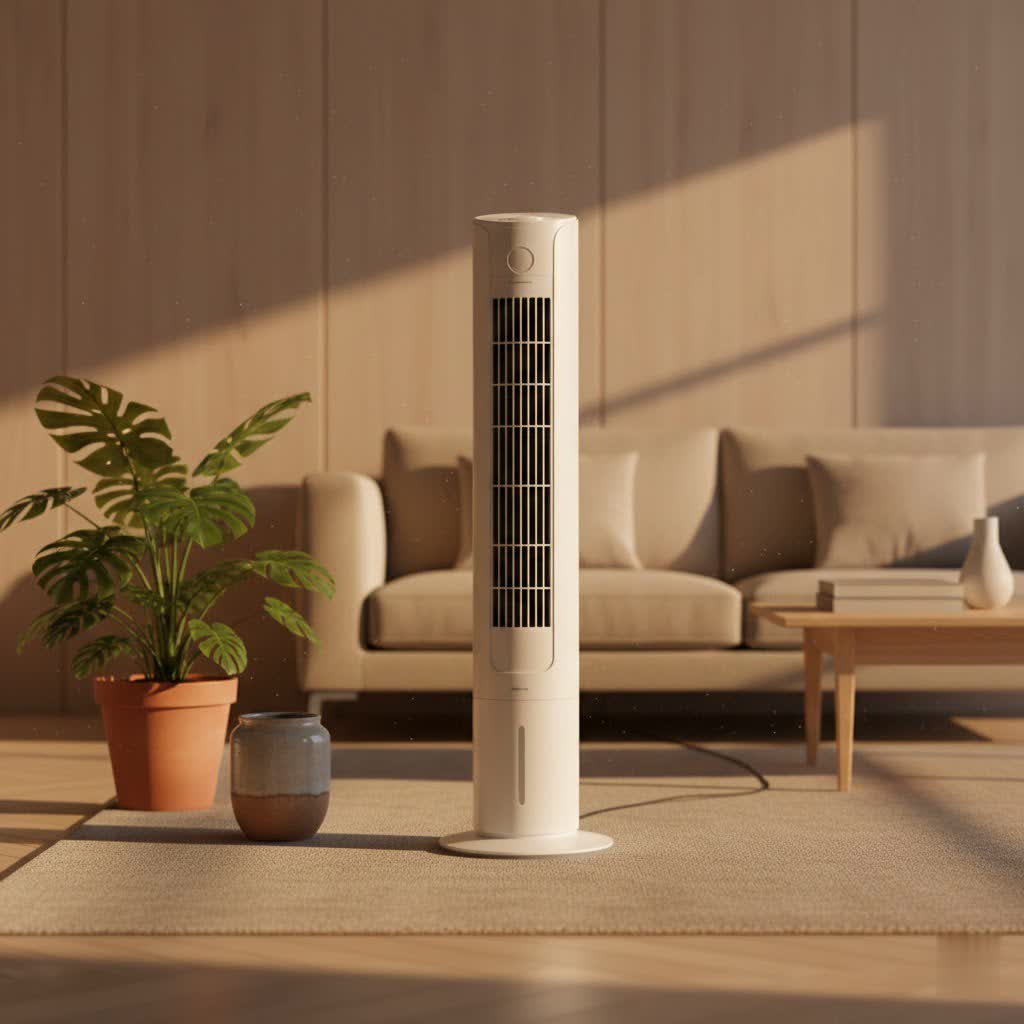
Advantages and Disadvantages of Tower Fans with Remote Control
Tower fans with remote control offer significant benefits, primarily enhancing user convenience and integrating modern features, but they also come with a few considerations. Understanding these aspects can help you make an informed decision when selecting your next cooling device.
Advantages:
- Compact and Space-Saving Design: Tower fans are inherently designed to be slim and tall, making them ideal for fitting into tight corners or small rooms without occupying much floor space. Their vertical orientation ensures effective air distribution across a wider area.
- Quiet Operation: Many contemporary tower fans are engineered to operate at lower noise levels, especially on their lower settings, making them perfect for bedrooms, nurseries, or quiet office environments where noise can be disruptive.
- Even and Consistent Airflow: With their oscillating feature, tower fans can sweep air across a broad arc, ensuring that cool air is distributed uniformly throughout the room rather than concentrating it in one spot. This consistent circulation creates a more comfortable atmosphere.
- Integrated Modern Features: Beyond basic cooling, many models come with advanced functionalities like multiple fan speeds, various wind modes (e.g., natural breeze, sleep mode), programmable timers, and even air purification or humidification.
- Unparalleled Convenience with Remote Control: The primary advantage of a tower fan with a remote is the ability to adjust all settings—power, speed, oscillation, timer, and modes—from a distance. This means no more getting up from your bed or sofa just to change a setting, offering true comfort and accessibility.
|
Our Picks for the Best Tower Fan in 2026
As an Amazon Associate I earn from qualifying purchases.
|
||
| Num | Product | Action |
|---|---|---|
| 1 | Tower Heater Fan with 4L Humidifier, 1800W Heating/Cooling, 2 Heat Levels, 3 Fan Speeds, 120° Oscillation, Indoor Space Heater with Timer & Safety Lock |

|
| 2 | Dreo Tower Fan for Bedroom, 25ft/s Velocity Quiet Floor Fan, 90° Oscillating Fans for Indoors with 4 Speeds, 4 Modes, 8H Timer, Standing Fans, Bladeless Fan, White, Nomad One (DR-HTF007) |
|
| 3 | Dreo Tower Fan for Bedroom, 90° Oscillating Standing Fans for Room with 4 Speeds, 3 Modes, 28dB Quiet for Sleep, 25ft/s Velocity, 8H Timer, Remote, Living Room, Office, Home, Black, TF117 - for Bedroom, for Room, for Sleep, 25ft/s Velocity, Living Room, Office, Home, Black |
|
| 4 | LEVOIT Classic 36 inch Tower Fan for Bedroom, 25ft/s Airflow Standing Fan that Blows Cold Air for Home, 90° Oscillation, Quiet 28dB, Remote, 12H Timer, 5 Speeds, 4 Modes with Smart Sensor, Black |
|
| 5 | Xcity TP09Pro Bladeless Tower Fan, 3-in-1 Air Purifier, Space Heater & Cooling Fan, HEPA H13 Filtration, Remote & Touch Control, Ultra-Quiet DC Motor for Bedroom & Home Office |
|
| 6 | LEVOIT Tower Fan for Bedroom, 25ft/s Velocity Standing Fan with 28dB Quiet for Sleep, Remoter, 12H Timer, 5 Speeds, 4 Modes, 90° Oscillation for Home, Office, Indoor, Bladeless 36 inch, White |
|
| 7 | Dreo Tower Fan for Bedroom, 4 Speeds, 3 Modes Standing Fans for Room with 90° wide Oscillating, 28dB Quiet for Sleep, 25ft/s Velocity, 29ft Coverage, 8H Timer, Remote, Living Room, Office, Home, White |
|
| 8 | Dreo Tower Fan for Bedroom, 25ft/s Velocity Quiet Floor Fan, 90° Oscillating Fans for Indoors with 4 Speeds, 4 Modes, 8H Timer, Standing Fans, Bladeless Fan, Black, Nomad One (DR-HTF007) |
|
| 9 | Amazon Basics 28" 60-Degree Oscillating Tower Fan for Bedroom, Living Room, Office, With 3 Speeds, Intuitive Mechanical Control, Black, 35W, 27.8"H x 9.4"D x 9.4"W |
|
| 10 | Dreo Tower Fan for Bedroom, 4 Speeds, 3 Modes Standing Fans for Room with 90° wide Oscillating, 28dB Quiet for Sleep, 25ft/s Velocity, 29ft Coverage, 8H Timer, Remote, Living Room, Office, Home, Grey |
|
Disadvantages:
- Higher Initial Cost: Due to their advanced features, sleeker designs, and the inclusion of remote control technology, tower fans often have a higher price point compared to traditional pedestal or box fans.
- Potential for Remote Misplacement: The convenience of a remote can quickly turn into frustration if it gets lost or misplaced. While most fans have on-board controls, relying solely on the remote can be a minor inconvenience if it’s not at hand.
- Limited Cooling in Very Large Spaces: While great for consistent airflow, the cooling power of a typical tower fan might be less effective than a powerful air conditioner or a large industrial fan in extremely spacious rooms, especially those with high ceilings.
- Requires Regular Cleaning: To maintain optimal performance and air quality, tower fans, particularly those with intricate grilles, require periodic cleaning to prevent dust buildup on their internal components and filters, which can affect efficiency and air quality.
Types of Tower Fans with Remote Control
The market offers a diverse range of tower fans, each designed with specific features to cater to different needs and preferences, all while integrating the convenience of remote control.
- Standard Tower Fans with Remote: These are the most common type, offering essential functions like multiple speed settings, oscillation, and a timer, all controllable via a dedicated remote. They are straightforward, reliable, and typically more affordable.
- Smart Tower Fans with Remote: Stepping up in technology, these fans often include Wi-Fi connectivity, allowing them to be controlled not only by a remote but also through a smartphone app or voice assistants like Alexa or Google Assistant. They may feature advanced sensors for automatic adjustment and integration into smart home ecosystems.
- Misting or Humidifying Tower Fans with Remote: Designed for dry climates or for those seeking an extra layer of cooling, these fans incorporate a water reservoir to release a fine mist into the air, simultaneously cooling and humidifying the environment. The misting function is also controllable via the remote.
- Bladeless Tower Fans with Remote: Offering a modern aesthetic and enhanced safety, especially for homes with children or pets, bladeless tower fans draw in air from the base and project it through an elongated loop. They are often quieter, easier to clean, and come with intuitive remote controls for a seamless user experience.
Comparing Popular Tower Fan Brands with Remote Control
When it comes to choosing a tower fan with a remote, several brands stand out for their innovation, reliability, and range of features. Each brand brings a unique set of advantages to the table, catering to different budgets and user demands.
- Dyson: Renowned for their groundbreaking bladeless technology and air purification capabilities, Dyson tower fans offer premium design, exceptionally quiet operation, and advanced smart features, often controllable via a sophisticated remote and a smartphone app. Their products come at a higher price point, reflecting their cutting-edge engineering and multi-functionality.
- Honeywell: A trusted name in home appliances, Honeywell provides a wide selection of durable and feature-rich tower fans. Their models typically offer reliable performance, multiple fan speeds, programmable timers, and oscillate for broad air circulation, all conveniently managed with an intuitive remote control. Honeywell fans often strike a balance between quality and affordability.
- Lasko: Lasko is a popular choice for consumers looking for effective cooling solutions at a more accessible price. Their tower fans are known for their strong airflow, slim profiles, and user-friendly features, including effective remote controls. While perhaps not as feature-rich as premium brands, Lasko delivers dependable performance for everyday cooling needs.
- Dreo: An emerging brand that has quickly gained recognition, Dreo offers modern tower fans that emphasize quiet operation, powerful airflow, and sleek design. Many Dreo models come with comprehensive remote controls, multiple modes, and energy-saving features, providing excellent value for their competitive price point.
- Xiaomi: Integrated into the smart home ecosystem, Xiaomi tower fans combine minimalist design with smart technology. They often feature Wi-Fi connectivity, app control, and a compact remote, allowing for seamless integration with other Xiaomi devices. These fans are a strong contender for tech-savvy users seeking a blend of style, smart features, and competitive pricing.
Comparison Table: Tower Fans with Remote
| Feature | Dyson Tower Fan | Honeywell Tower Fan | Lasko Tower Fan | Dreo Tower Fan | Xiaomi Tower Fan |
|---|---|---|---|---|---|
| Price Range | Premium (High) | Mid-Range | Budget-Friendly | Mid-Range | Mid-Range (Competitive) |
| Technology | Bladeless, Air Pur. | Conventional, Durable | Conventional, Powerful | Aerodynamic, Quiet | Smart, IoT |
| Design | Futuristic, Sleek | Functional, Classic | Practical, Slim | Modern, Minimalist | Minimalist, Smart |
| Noise Level | Very Low | Moderate | Moderate | Low | Low |
| Durability | High | High | Good | Very Good | Good |
| Smart Features | Advanced (App, Voice) | Basic (Remote Only) | Basic (Remote Only) | Advanced (Some models) | Advanced (App, Voice) |
| Remote Control | Feature-rich | Standard | Standard | Feature-rich | Smart integration |
How to Choose the Right Tower Fan with Remote for Your Home
Selecting the ideal tower fan with a remote control requires considering several factors to ensure it perfectly matches your specific needs and living space. Making an informed choice will enhance your comfort and satisfaction.
- Determine Your Usage Needs: First, consider the size of the room you intend to cool. A small fan might suffice for a personal workspace, while a more powerful, oscillating model is better for a larger living area. Think about how many people will be using it and if you need additional functions like air purification or humidification.
- Set a Realistic Budget: Tower fans range significantly in price, from economical models to high-end smart devices. Determine how much you are willing to spend, keeping in mind that more features, advanced technology, and premium brands generally come with a higher price tag.
- Evaluate Essential Features: Look for features that enhance usability and comfort. A reliable remote control is crucial, but also consider multiple fan speeds, a programmable timer for automatic shut-off, various wind modes (e.g., natural, sleep), and an easy-to-read digital display.
- Consider Smart Capabilities: If you’re building a smart home or appreciate technological integration, explore models with Wi-Fi connectivity, app control, or voice assistant compatibility. These features offer unparalleled convenience and automation.
- Assess Noise Level: For bedrooms or quiet offices, a fan with a low noise output, especially on its lower settings, is essential. Check product specifications for decibel ratings or look for models specifically marketed as “quiet” or “sleep-friendly.”
- Research Brand Reputation and Warranty: Opt for reputable brands known for their quality and customer service. A good warranty provides peace of mind and indicates the manufacturer’s confidence in their product’s durability. Always read user reviews to gauge real-world performance and reliability.
Tips for Using and Maintaining Your Tower Fan with Remote
To maximize the efficiency and longevity of your tower fan with remote, proper usage and routine maintenance are key. A little care can go a long way in ensuring your fan provides optimal cooling for years to come.
- Optimal Placement: Position your tower fan in a strategic location to promote effective air circulation. Placing it near a window can help draw in fresh air, or position it in a corner to allow the oscillation to cover the widest possible area. Avoid placing it directly against walls or furniture that might obstruct airflow.
- Regular Cleaning for Performance: Dust and debris can accumulate on the fan’s grilles and internal components, reducing airflow and potentially affecting air quality. Regularly wipe down the exterior with a damp cloth and use a vacuum cleaner with a brush attachment or compressed air to clean the vents and internal blades as per the manufacturer’s instructions.
- Remote Control Battery Care: Ensure the remote control always has fresh batteries for uninterrupted convenience. If the fan isn’t responding, check the batteries first. When storing the fan for extended periods, remove the remote’s batteries to prevent corrosion.
- Use Correct Voltage: Always ensure your tower fan is plugged into an electrical outlet with the correct voltage as specified by the manufacturer. Using an incorrect voltage can damage the fan and pose a safety risk.
- Avoid Continuous Long-Term Operation: While durable, it’s generally advisable not to run your fan continuously for excessively long periods without breaks. Giving the motor occasional rest can help prolong its lifespan and prevent overheating.
- Proper Storage During Off-Season: When the cooling season ends, clean your tower fan thoroughly and store it in a dry, dust-free place. Using the original packaging or a protective cover can help shield it from dust and potential damage until the next season.
So sánh quạt tháp với các loại quạt khác
Tower fans with remote controls offer a distinct set of advantages when compared to other common types of fans and cooling devices, making them a unique solution for various household needs.
Tower Fan vs. Pedestal Fan: Pros and Cons
Tower fans and pedestal fans both aim to circulate air, but they do so with different aesthetics and functionalities.
- Tower Fans: Known for their slim, vertical design, they are space-efficient and often blend seamlessly with modern decor. They typically offer wider oscillation, distributing air across a broader area, and often come with advanced features like remote controls, timers, and multiple wind modes. Their enclosed design also makes them safer for homes with children or pets.
- Pedestal Fans: These traditional fans have a visible blade and an adjustable height. They generally produce a more focused, powerful blast of air and are often more portable due to their lighter weight. While some models now include remotes, they might not offer the same level of discreet airflow or design integration as tower fans.
Tower Fan vs. Portable Air Conditioner/Air Cooler: When to Use Which
Deciding between a tower fan and a portable air conditioner or air cooler depends heavily on your cooling needs and environmental factors.
- Tower Fans: Ideal for air circulation and enhancing comfort in mild to moderate temperatures. They cool by moving air and creating a wind-chill effect, making a room feel cooler. They are energy-efficient, easy to move, and require no special installation or water. A tower fan with a remote is perfect for everyday use when you need a gentle breeze or to aid air conditioning.
- Portable Air Conditioners: These units actively lower the room temperature by removing heat and humidity, similar to a central AC unit but on a smaller scale. They are much more effective in hot and humid climates, but are less energy-efficient, heavier, and require venting hot air outside (usually through a window kit).
- Air Coolers (Evaporative Coolers): These are a middle ground, using water to cool the air through evaporation. They are effective in dry climates where humidity is low, adding moisture while cooling. They are more energy-efficient than portable ACs but less powerful, and can increase humidity levels, which may be undesirable in already humid environments.
> “A tower fan with a remote isn’t just about cooling; it’s about seamless control and integrating comfort into your daily routine without interruption.” – David Chen, Lead Product Designer, Home Comfort Innovations
Conclusion
The modern tower fan with a remote control is far more than a simple appliance; it’s a sophisticated solution designed to elevate your home comfort with unmatched convenience. From their sleek, space-saving designs to their quiet operation and an array of intelligent features, these fans cater to a diverse range of needs, whether you prioritize advanced technology, energy efficiency, or pure simplicity. The ability to adjust settings from anywhere in the room makes them an ideal choice for creating your perfect environment without interruption. As we’ve explored, understanding the types, brands, and key considerations will empower you to choose a tower fan that not only cools your space effectively but also integrates seamlessly into your lifestyle. What are your key considerations when choosing a tower fan with a remote control for your living space?
Frequently Asked Questions
Are tower fans with remote energy efficient?
Yes, many tower fans, especially newer models, are designed with energy efficiency in mind. They consume significantly less power than air conditioners and often include energy-saving features like timers and eco-modes, making them an economical choice for supplementary cooling or in milder temperatures.
How far does a tower fan remote typically work?
Most tower fan remotes operate effectively within a range of 15 to 20 feet (4.5 to 6 meters) from the fan, provided there are no significant obstructions between the remote and the fan’s infrared receiver. For optimal performance, point the remote directly at the fan.
Can I use a universal remote with my tower fan?
While some basic universal remotes might offer limited compatibility with certain tower fans, it’s generally not guaranteed. Dedicated tower fan remotes are programmed specifically for their model’s unique functions. For smart tower fans, smartphone apps often serve as a highly functional universal remote.
What is “sleep mode” on a tower fan?
“Sleep mode” is a common feature on tower fans designed to provide a quieter and more comfortable sleeping environment. In this mode, the fan typically operates at its lowest speed, often with a dimmer display, and may gradually reduce fan speed over time to prevent overcooling during the night.
How often should I clean my tower fan?
For optimal performance and air quality, it’s recommended to clean your tower fan every 2-4 weeks, especially during periods of frequent use. A more thorough cleaning, including vacuuming internal vents, should be done every 2-3 months to prevent dust buildup and maintain airflow efficiency.
